

Okay, so check this out—Solana moves fast. Really fast. Wow! If you blink, a block’s gone and a token swap has already settled. My instinct said that conventional explorers would feel clunky here; and yeah, they often do.
At first glance the tools look familiar. But they’re optimized differently. Initially I thought blockchain explorers were interchangeable across chains, but then I noticed the latency patterns and UX choices that are Solana-specific. Actually, wait—let me rephrase that: Solana demands low-latency interfaces and concise token views, and not every explorer respects that need.
Here’s what bugs me about generic analytics dashboards. They try to do everything and end up doing a few things poorly. On one hand you want deep on-chain context; though actually, too much noise hides the signals you need. Hmm… somethin’ like that—too many charts, not enough clarity.
So what do you need when you’re tracking tokens on Solana? You need transaction timelines, token holder distributions, program interactions, mint history, and quick drills for rug-checks. Seriously? Yes. Fast, readable, and reliable—those are the priorities that end up saving you money and time.
How to make analytics useful, not overwhelming
Start with the basics. Look at the mint date and initial distribution. Check ownership concentration. Check recent large transfers. Whoa! Pause when you see clustered whales moving in days before an airdrop or price pump. My experience: patterns often repeat across projects, and early signs—big token transfers, program upgrades, or sudden change in liquidity pools—are red flags worth investigating.
What I do, step by step, is simple and repeatable. First, open the token page. Next, scan the top holders list for concentration. Then, open the latest 20 transactions and filter by program or memos. This triage helps me spot normal market activity versus coordinated moves. I’m biased, but it’s saved me from very very messy trades more than once.
Okay—here’s a practical tip. When you see a transfer to a mysterious wallet followed by rapid dispersal to many wallets, suspect swapping bots or wash trading. On the other hand, transfers into known exchange addresses usually mean liquidity or listing moves. Not always, but often.
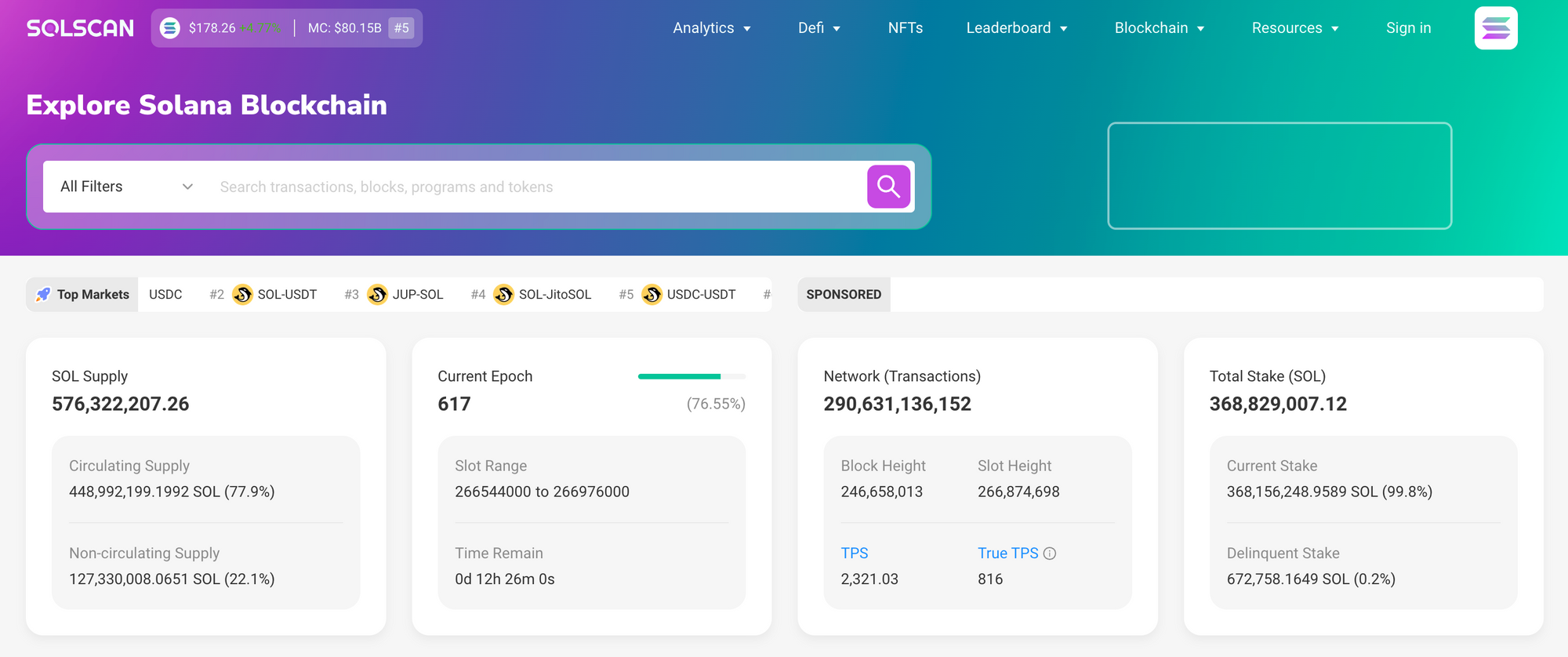
For day-to-day monitoring I prefer tools that combine raw on-chain data with readable visual cues. That’s why I use solscan as a routine reference; the interface gives quick access to token mint info, transfer logs, and program activity without hunting through nested menus. The link I rely on is solscan.
There’s nuance though. Program-level interactions in Solana can be subtle. A token can be wrapped, frozen, or delegated by a program call, and if you miss that, your risk assessment is incomplete. So I scan the instructions behind major transactions—this is where the meat is.
Let me be honest: the learning curve felt steep at first. I once misread a memo and assumed liquidity was locked when it wasn’t. Oof. That cost me sleep. But those errors teach you what to lock into your checklist.
Key Solana-specific signals to watch
Program upgrades. Short sentence. When a program that manages a token is upgraded or re-assigned, the rules of the game can change—sometimes trivially, sometimes drastically. My read of on-chain activity now always includes checking for recent program authority changes.
Mint anomalies. Medium length here for clarity. Unexpected additional mints, or mints to obscure addresses, are immediate red flags for inflation risk. Monitor the mint authority and its activity over time. If it shows up active after a long dormancy, alert bells should ring.
Liquidity shifts. Longer explanation because there’s more to unpack: watch for sudden withdrawals from concentrated LP pools or transfers into bridging contracts where tokens might be wrapped and moved off-chain, since those actions affect on-exchange depth and price vulnerability, especially on thinly traded pairs with low TVL.
Taxonomy of holders. Short. What percentage of supply sits in top 10 wallets? Medium. Less than 10% concentration is healthier, though it depends on the token’s purpose and staking model. Long: a token heavily held by a few wallets is susceptible to dump risk or coordinated price manipulation, and you should model potential outcomes for selling pressure in your head (or in a spreadsheet) before committing capital.
Timing matters. Trades that cluster right after token unlocks or announcements are suspect. Track the timeline of governance votes and vesting schedules to correlate on-chain moves with expected liquidity events.
Common questions I get
How do I verify a token’s legitimacy quickly?
Start with the token mint and holder distribution. Check for program authority activity and recent mints. Scan recent transactions for memos or interaction with known bridge or exchange addresses. If many tokens move through short-lived wallets or mixing patterns, step back. Seriously—if somethin’ feels off, it probably is.
Can analytics prevent every scam?
No. Short answer. Analytics reduce odds and help prioritize checks. You still need complementary signals: community chatter, audits (if any), verified project accounts, and off-chain promises. On one hand, analytics expose many scams early; though actually, social engineering and rug exits still trip up even seasoned users.
Final note—this field evolves. Tools improve, program patterns change, and bridge mechanics shift. I’m not 100% sure about every emerging exploit, but I try to keep the checklist adaptable. If you build rituals around mint checks, holder scans, and instruction-level reviews, you’ll be in a much better spot. Trailing thought… stay curious, and don’t trust first impressions blindly.