Why Solana Analytics Matter: A Practical Guide to Token Tracking with Solscan

Okay, so check this out—Solana moves fast. Really fast. Wow! If you blink, a block’s gone and a token swap has already settled. My instinct said that conventional explorers would feel clunky here; and yeah, they often do.

At first glance the tools look familiar. But they’re optimized differently. Initially I thought blockchain explorers were interchangeable across chains, but then I noticed the latency patterns and UX choices that are Solana-specific. Actually, wait—let me rephrase that: Solana demands low-latency interfaces and concise token views, and not every explorer respects that need.

Here’s what bugs me about generic analytics dashboards. They try to do everything and end up doing a few things poorly. On one hand you want deep on-chain context; though actually, too much noise hides the signals you need. Hmm… somethin’ like that—too many charts, not enough clarity.

So what do you need when you’re tracking tokens on Solana? You need transaction timelines, token holder distributions, program interactions, mint history, and quick drills for rug-checks. Seriously? Yes. Fast, readable, and reliable—those are the priorities that end up saving you money and time.
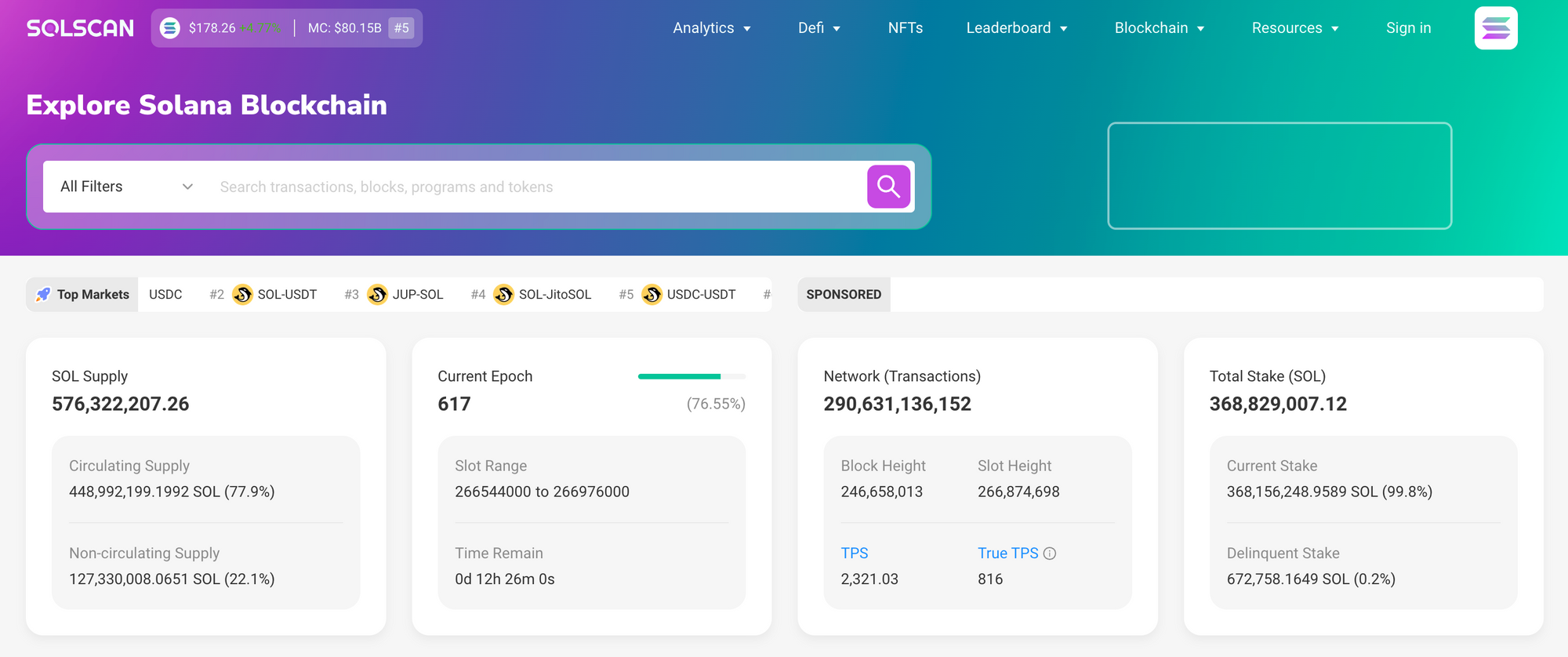
Screenshot-style illustration of a token dashboard with transaction list and holder distribution

How to make analytics useful, not overwhelming

Start with the basics. Look at the mint date and initial distribution. Check ownership concentration. Check recent large transfers. Whoa! Pause when you see clustered whales moving in days before an airdrop or price pump. My experience: patterns often repeat across projects, and early signs—big token transfers, program upgrades, or sudden change in liquidity pools—are red flags worth investigating.

What I do, step by step, is simple and repeatable. First, open the token page. Next, scan the top holders list for concentration. Then, open the latest 20 transactions and filter by program or memos. This triage helps me spot normal market activity versus coordinated moves. I’m biased, but it’s saved me from very very messy trades more than once.

Okay—here’s a practical tip. When you see a transfer to a mysterious wallet followed by rapid dispersal to many wallets, suspect swapping bots or wash trading. On the other hand, transfers into known exchange addresses usually mean liquidity or listing moves. Not always, but often.

For day-to-day monitoring I prefer tools that combine raw on-chain data with readable visual cues. That’s why I use solscan as a routine reference; the interface gives quick access to token mint info, transfer logs, and program activity without hunting through nested menus. The link I rely on is solscan.

There’s nuance though. Program-level interactions in Solana can be subtle. A token can be wrapped, frozen, or delegated by a program call, and if you miss that, your risk assessment is incomplete. So I scan the instructions behind major transactions—this is where the meat is.

Let me be honest: the learning curve felt steep at first. I once misread a memo and assumed liquidity was locked when it wasn’t. Oof. That cost me sleep. But those errors teach you what to lock into your checklist.

Key Solana-specific signals to watch

Program upgrades. Short sentence. When a program that manages a token is upgraded or re-assigned, the rules of the game can change—sometimes trivially, sometimes drastically. My read of on-chain activity now always includes checking for recent program authority changes.

Mint anomalies. Medium length here for clarity. Unexpected additional mints, or mints to obscure addresses, are immediate red flags for inflation risk. Monitor the mint authority and its activity over time. If it shows up active after a long dormancy, alert bells should ring.

Liquidity shifts. Longer explanation because there’s more to unpack: watch for sudden withdrawals from concentrated LP pools or transfers into bridging contracts where tokens might be wrapped and moved off-chain, since those actions affect on-exchange depth and price vulnerability, especially on thinly traded pairs with low TVL.

Taxonomy of holders. Short. What percentage of supply sits in top 10 wallets? Medium. Less than 10% concentration is healthier, though it depends on the token’s purpose and staking model. Long: a token heavily held by a few wallets is susceptible to dump risk or coordinated price manipulation, and you should model potential outcomes for selling pressure in your head (or in a spreadsheet) before committing capital.

Timing matters. Trades that cluster right after token unlocks or announcements are suspect. Track the timeline of governance votes and vesting schedules to correlate on-chain moves with expected liquidity events.

Common questions I get

How do I verify a token’s legitimacy quickly?

Start with the token mint and holder distribution. Check for program authority activity and recent mints. Scan recent transactions for memos or interaction with known bridge or exchange addresses. If many tokens move through short-lived wallets or mixing patterns, step back. Seriously—if somethin’ feels off, it probably is.

Can analytics prevent every scam?

No. Short answer. Analytics reduce odds and help prioritize checks. You still need complementary signals: community chatter, audits (if any), verified project accounts, and off-chain promises. On one hand, analytics expose many scams early; though actually, social engineering and rug exits still trip up even seasoned users.

Final note—this field evolves. Tools improve, program patterns change, and bridge mechanics shift. I’m not 100% sure about every emerging exploit, but I try to keep the checklist adaptable. If you build rituals around mint checks, holder scans, and instruction-level reviews, you’ll be in a much better spot. Trailing thought… stay curious, and don’t trust first impressions blindly.

Picking the Right Solana Validator: A Practical Guide to Rewards, Risk, and Rewards That Actually Matter

Started mid-thought — because that’s how this topic usually hits me when I open my wallet. Wow! Choosing a validator on Solana feels simple until you actually look under the hood. Most folks see an APY number and stop. My instinct said there was more to it. Seriously? Yep. There’s more — and some of it matters a lot.

Quick reality check. Staking on Solana is not just “lock and forget.” True, you delegate your SOL and earn staking rewards, but the compounding effects, validator performance, and fees shape your yield. On one hand, the nominal reward rate is attractive. On the other hand, downtime and high commission can erode those gains. Initially I thought picking the highest APR was the smart move, but then I noticed validators with shiny rates missing blocks during network congestion — ouch. Actually, wait — let me rephrase that: reliability beats tiny differences in commission for most retail stakers.

Here’s the thing. Validators are the backbone of Solana’s fast finality. They sign blocks, secure the ledger, and handle stake. Hmm… there’s a trade-off. You can stake with a big well-known validator (safe-ish) or take a punt on a newer operator with lower fees. My gut says diversify a bit. But don’t go crazy. A single risky validator failure can cost you more than the extra 0.5% commission you hoped to save.

Solana validator network illustration with nodes and staking lines

What to look for — beyond APR

First, check performance metrics. Uptime and vote account performance are crucial. Short sentence. Look for consistent on-time voting; missed votes mean missed rewards. Transparency matters too — operators who publish infra details (locations, redundancy, monitoring) usually care more about long-term reliability. Also watch commission rates and how often they change. Some validators advertise low fees but raise them later when they have large stake — that bugs me. I’m biased toward validators that explain fee models clearly.

Second, consider decentralization impact. Delegating to mega-validators concentrates power. On one hand, delegating to a popular validator may feel safe because of proven uptime. Though actually, if too many people pile into the same few validators, the network’s resilience weakens. So I usually split stake across two or three good validators — a practical balance between simplicity and decentralization. Something felt off about delegating everything to the biggest name, and that’s not just FUD.

Third, community and governance. Validators that engage with the community, support open-source tooling, or run initiatives (like stake matching or education) tend to be more trustworthy. They’re often the ones who respond fast during network upgrades or incidents. And yes — sometimes validators are aligned with projects that matter to you, like NFT marketplaces on Solana or DeFi protocols, which can be convenient.

Validator rewards: how they actually work

Rewards on Solana are distributed based on stake weighting and performance. Short. The network mints inflationary rewards and allocates them to validators proportional to active stake and voting accuracy. Validators then take a commission and pass the remainder to delegators. Compounding frequency depends on your wallet — daily or epoch-based payouts are common. My inner nerd loves the math here, though I’ll be honest: the math gets fuzzy with slashing risk, commission changes, and stake activation delays.

Activation delay is a big practical item. When you delegate, your stake doesn’t earn immediately — there is an activation process tied to epochs. That means timing matters around network events and upgrades. Also, unstaking isn’t instant either: you pass through deactivation and wait for epochs to close before funds are fully liquid. That has bitten traders who assumed they could free up SOL the same day.

Commission structure varies. Some validators charge 0% initially to attract stake, then move to 5-10% later. Others keep steady commissions but offer extra perks like airdrops or analytics. How important are perks? Depends on you. For long-term passive holders, stable commission and high uptime win. For active NFT flippers, faster access and low fees might be higher priority.

Choosing a wallet extension that supports staking and NFTs

Okay, so you know what to look for in a validator. Next: choose the right wallet to delegate from. Wallet UX matters. You want clear delegation flows, transparent commission reporting, and NFT support so your collectibles don’t get lost in some separate app. Check the extension’s reputation and features. Also check security practices — seed phrase handling, permissions, and open-source code if available. I’m partial to tools that let me view validators, compare metrics, and switch delegates without fuss.

For folks who prefer a browser extension, there’s a solid option worth trying out — it’s simple, supports staking, and handles NFTs in the same place: https://sites.google.com/solflare-wallet.com/solflare-wallet-extension/ . Seriously, it’s clean, and I’ve used similar flows when juggling stake across a couple of validators. (oh, and by the way… check extension permissions before you approve anything.)

Security aside, UX friction is real. If the wallet makes delegation a multi-step, confusing process, you might avoid staking entirely — and that’s a real cost. So choose one that fits your comfort level: some people want one-click stake, others want full control and advanced options.

Practical checklist before delegating

1) Check validator uptime and missed vote history. Short. 2) Confirm commission and recent changes. 3) Review the validator’s community presence and transparency. 4) Ensure your wallet supports easy delegation and NFT access. 5) Consider splitting stake between validators to balance risk and decentralization. 6) Remember activation and deactivation timings.

Don’t ignore slashing — it’s rare on Solana, but misconfigurations and double-signing can happen. If a validator behaves maliciously or is compromised, you could lose stake, though the mechanisms are not as punitive as some chains. On the flip side, validators with great uptime but opaque operations are also red flags. There’s no perfect heuristic; mix metrics with a little judgment.

Common questions (FAQ)

How much SOL should I stake to start?

Start small if you’re testing — maybe a handful of SOL — and observe rewards and activation times. Short. You can always add more later. If you’re staking long-term, aim to diversify across two validators rather than concentrate everything in one place.

Will staking prevent me from trading quickly?

Yes and no. Unstaking requires epoch transitions which can take time, so if you need instant liquidity, keep a portion of your holdings unstaked. Seriously, plan around your cash flow needs. On one hand you want yields; on the other hand, markets can move fast.

Can validators steal my funds?

No. Delegation only assigns your vote power; you keep control of your keys and funds. But validators can misbehave in ways that reduce rewards or (in extreme cases) lead to slashing. So protect your seed phrase and delegate to trustworthy operators. I’m not 100% sure about hypothetical edge cases, but that’s the gist.

To wrap without sounding like a textbook: staking on Solana is practical and worth doing, but it’s not autopilot. Wow! Do your homework, pick validators that combine uptime, transparency, and reasonable fees, and choose a wallet extension that makes staking and NFT management straightforward. My take? Reliability and clear communication beat marginally higher APRs almost every time. Somethin’ to live by, maybe.